
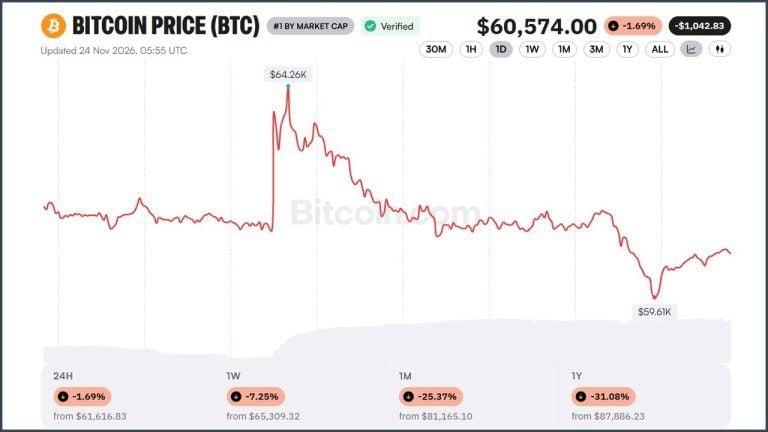
One of the most attractive aspects of cryptocurrency investments has always been associated with the relative liquidity of this marketplace. However, this silver lining can often be obscured by a cloud of volatility. The fact that Bitcoin has tested its lowest levels since April 2026 clearly signals that a readjustment may be in order. Investors are also worried, as the recent dip below $74,000 might indicate that another round of bearish sentiment is soon to take hold.
Should traders liquidate their current positions? Might it be better to short all cryptocurrencies for the moment? Although there can be arguments made for both of these strategies, we need to remember that hedging is still a very real possibility. Stablecoins pegged to the United States dollar could represent the safest port in this storm, and it pays to take a closer look at why some astute traders are adopting this rather conservative mindset.
How Dollar-Pegged Stablecoins Maintain Their Value
As the name already suggests, stablecoins are often capable of superseding (at least to an extent) some of the volatility that can be attributed to open-market crypto volatility. This arises from how they function. Unlike other tokens, stablecoins are directly pegged to the dollar at roughly $1 per coin. Note that they may also be linked to other US assets, such as short-term treasuries. So what happens if the price begins to dip?
Assuming that the value of a stablecoin, such as USDC, dramatically falls below its $1 value, arbitrageurs will often choose to purchase these tokens at a lower value. This serves two primary purposes:
- It enables them to become involved on a dip (securing potentially higher profit margins)
- Large-scale purchases help to boost prices back to a relative 1:1 parity.
However, there is another reason why stablecoins represent attractive assets during times of uncertainty.

Why Stablecoin Demand May Change During Market Volatility

One of the misconceptions that has been attributed to cryptocurrencies such as Bitcoin is the belief that the sheer value of this asset makes it somewhat immune to short-term price swings. The recent performance of Bitcoin should clearly illustrate otherwise. The fact of the matter is that the vast majority of crypto tokens, and meme coins, are affected by several variables. These include market sentiment, supply, demand, speculation, and sudden cascading liquidations.
Stablecoins function in a slightly different manner. Thanks to their inherent relationship with the dollar, they can be used as a more “stable” medium of exchange when other tokens may begin to exhibit pear-shaped movements.
Stablecoin Use Cases Beyond Cryptocurrency Trading
Another potent argument which stablecoin pundits will often make involves the utilitarian nature of these tokens. For instance, some readers may not be aware that they can often serve as a substitute for fiat when playing online blockchain-based games may offer. Well-known examples include Tether and USD Coin; two options that a growing number of iGaming providers work with.
This is pivotal when it comes to real-world applications. Unlike meme coins, and even a handful of major cryptocurrencies, the fact that stablecoins can now double as viable transfer options has helped to increase demand, and if chart values fall, they are not likely to suffer from a lack of liquidity.
Risks and Limitations of Stablecoins
Any article discussing the merits of specific cryptocurrencies must seek to adopt a fair, and balanced approach. This is why it is just as logical to highlight some pitfalls that could impact a stablecoin investment.
Perhaps the most obvious concern involves what would happen if a stablecoin were suddenly de-pegged from its underlying currency. While this is unlikely, another problem has already been illustrated in the past. Some readers may recall the devaluation of USDC once it was discovered that this stablecoin was linked to the failing Silicon Valley Bank. Confidence essentially collapsed, and the value of USDC plummeted.
A final stumbling block is directly tied to inflation. Cryptocurrencies have been traditionally associated with hedges against inflationary rates. This is not the case with stablecoins due to their relationship with fiat. In other words, the value of tokens can be directly impacted by rising, or falling, inflationary data. If interest rates begin to rise, borrowing costs will follow suit. This makes it more expensive to purchase crypto, and investors are more likely to turn to low-risk positions (such as high-yield savings accounts).
Conclusion: What Bitcoin Volatility Could Mean for Stablecoin Demand
We can now see why some astute traders have been turning to stablecoins as a means to offset recent market jitters. However, this does not signify that such assets represent a win-win situation. Risks should always be balanced with potential rewards, and investors should allocate more funds than they are prepared to lose.
Might Bitcoin continue to fall? Will we soon reach a stable level of support before the end of 2026? This question is on everyone’s mind, and time will tell.
The post Could Bitcoin’s Price Decline Increase Demand for Stablecoins? appeared first on CryptoNinjas.

You can get bonuses upto $100 FREE BONUS when you:
💰 Install these recommended apps:
💲 SocialGood - 100% Crypto Back on Everyday Shopping
💲 xPortal - The DeFi For The Next Billion
💲 CryptoTab Browser - Lightweight, fast, and ready to mine!
💰 Register on these recommended exchanges:
🟡 Binance🟡 Bitfinex🟡 Bitmart🟡 Bittrex🟡 Bitget
🟡 CoinEx🟡 Crypto.com🟡 Gate.io🟡 Huobi🟡 Kucoin.














Comments